We are committed to championing sustainability in everything we do — from producing more sustainable solutions and helping our customers reduce their environmental footprint, to being a fair and responsible employer and neighbor.
Basis for preparation
This is the sustainability report for the FY 25/26 (1 July 2025 to 30 June 2026) for dormakaba Holding AG ("dormakaba") and its subsidiaries. It has been prepared on a consolidated basis, and the scope of consolidation is the same as that applied for the consolidated financial statements. It is the company's eleventh sustainability report and was prepared based on the November 2025 draft version of the European Sustainability Reporting Standards (ESRS). dormakaba will be required to report in line with the ESRS in FY 27/28 at the earliest, and we are taking decisive steps now to ensure we meet these requirements. All carbon emissions data was prepared in accordance with the Greenhouse Gas Protocol Corporate Standard using the operational control approach. For metrics that were already reported in the previous year, comparative metrics are disclosed. For metrics that have not been reported previously, we apply the exemption to omit.
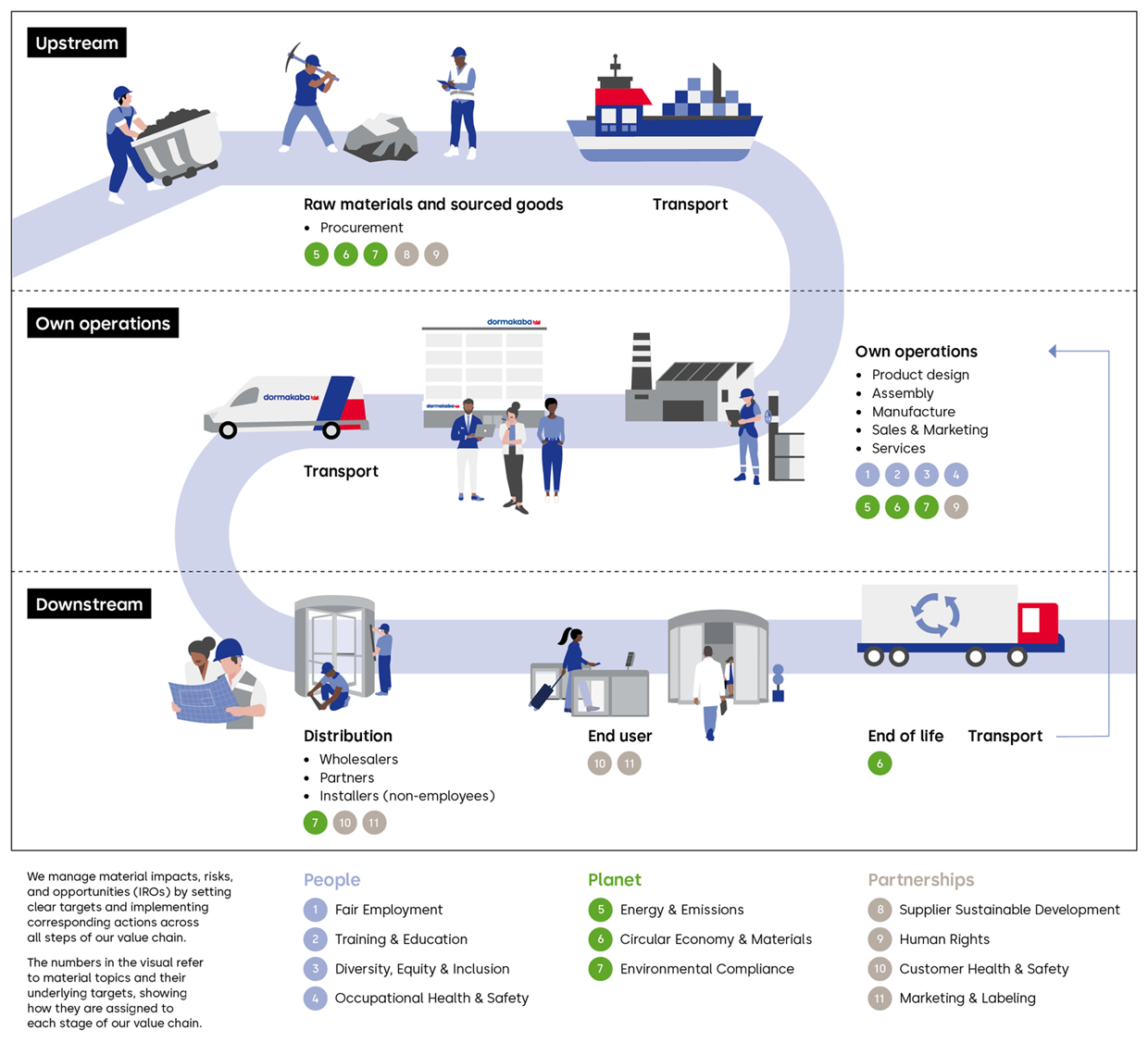
The statement covers our material impacts, risks, and opportunities across our own operations and our upstream and downstream value chain. This includes raw materials and sourced goods, transportation, dormakaba production and administration, and the distribution, use, and end-of-life phases of our products.
Changes in preparation or presentation of sustainability information
Methodological changes: In line with the Greenhouse Gas Protocol recommendations, emissions in the current reporting period were calculated based on the most recent available emission factors. The isolated effect of the updated emission factors, fuel property and heating values resulted in a marginal increase of 0.2% of Scope 1+2 market-based emissions, and 1.5% reduction of Scope 1+2 location-based emissions. Furthermore, the update resulted in a 5% increase in Scope 3 Category 1 and a 9% decrease in Scope 3 Category 11. Base-year emissions were not recalculated, as changes remained below the materiality threshold, and original figures reflected the best available data at the time. Interim years between the base year and reporting year were also not recalculated. In addition, employee turnover was calculated in line with revised ESRS requirements, using average headcount as the denominator. Previous year figures have been restated accordingly and show marginal impact (<0.1% pp). In addition, the data coverage for Scope 3 Category 6 has been expanded to include actual travel bookings from our global travel booking platform, limiting direct comparison with the previous year's figures.
Presentation of additional information included in the sustainability statement: This sustainability report also covers additional mandatory reporting requirements under the Swiss Code of Obligations, including climate-related disclosures aligned with the Task Force on Climate-related Financial Disclosures (TCFD) recommendations. EU Taxonomy figures are also presented.
Application of material judgment and information subject to significant uncertainties: The preparation of this statement required the use of judgment and estimates. This applies particularly to the Double Materiality Assessment, which involved structured indicators, internal data, and weighted stakeholder feedback to determine material topics. It also applies to the climate scenario analysis, which used frameworks from the Network for Greening the Financial System (NGFS) to evaluate transition risks across multiple time horizons. Scope 3 GHG emissions for all reported applicable categories are calculated using a combination of internal activity data, external data where available, company assumptions, and secondary emission factors. The specific data sources and assumptions vary by category and include estimated inputs where primary data is incomplete or unavailable. Spend-based Scope 3 estimates are derived from dormakaba's global procurement information system (PRIS), the company's central source of procurement data. While PRIS covers the substantial majority of third-party spend, certain cost categories — such as business travel booked through dedicated channels — are not yet fully reflected. Data coverage and quality are being continuously expanded as part of the company's ongoing ESG data improvement roadmap. Industry-average or other secondary emission factors are applied. As a result, the calculations are subject to inherent uncertainty due to the use of assumptions, proxy data, and average emission factors. We have also launched a supplier questionnaire through an external service provider to collect additional primary activity data for selected Scope 3 categories.
Internal controls over sustainability reporting
The Sustainability Management System integrates risk governance and reporting controls. It is built on the foundation of a regular double materiality assessment, conducted at least every five years and reviewed annually to adapt to emerging issues or stakeholder concerns. This ensures the quality, reliability, and accuracy of our sustainability reporting. The main features include:
Data collection and consolidation: Environmental data on energy, water, waste, and materials consumption is collected via an internal business intelligence platform, Infor BI, with a dedicated reporter at each site. Reporting is quarterly for most environmental data and half-yearly for materials use. The data mentioned above covers over 93% of dormakaba employees across 110 locations worldwide, including all manufacturing sites and locations with more than 20 employees. Locations below the 20 FTE threshold are not material from an environmental impact standpoint nor is their impact extrapolated into the reported environmental data, with the exception of smaller service branches in the USA for which fleet fuel data is gathered. Injury rates, accident types, corrective actions, and root-cause analyses are captured in a web-based health and safety tool, using the same threshold. Most HR data—such as workforce composition, turnover, and diversity—is sourced from the Group-wide SAP SuccessFactors platform and cover 100% of employees, while additional indicators (e.g., adequate wages, social protection, disability rate, family-related leave, training hours, and collective bargaining) are reported annually by local HR managers through Infor BI using the same materiality threshold as above. Each location has a designated data reporter who is trained on the employees to be included in scope and instructed to report disability data only where its collection and reporting are permitted under applicable national law. The metric is derived from payroll records and includes employees formally recognized or registered as persons with disabilities in accordance with the applicable national definition.
Data quality control: Environmental and material data is reviewed quarterly and/or half-yearly by Corporate Sustainability. After the end of the financial year, an external consultant provides further data quality controls on environmental, materials and HR data.
Management review and approval: The review process for qualitative and quantitative content involves topic owners in the Executive Committee, the CEO, and the CFO. The Audit Committee is responsible for contributing to the integrity of the sustainability report, and the Board of Directors reviews and approves the final report.
External assurance
External auditors conduct a limited assurance of all carbon emission figures (Scope 1–3) in accordance with the GHG Protocol. Additionally, waste, materials, social protection, and disability metrics were pre-assessed by external auditors to discover if any gaps versus ESRS requirements existed. The findings have been reported to the Audit Committee of the Board of Directors.
dormakaba value chain
At dormakaba, sustainability is embedded throughout the entire value chain. From the sourcing of raw materials through the end-of-life of our products, we take a comprehensive approach to integrating responsible practices at every stage. Through this integrated approach, dormakaba is committed to reducing environmental impact, safeguarding human rights, and creating long-term value for all stakeholders.
Raw materials & sourced goods (upstream)
Our global procurement volume with external vendors represents around 50% of total net sales. We work with approximately 12,000 active suppliers, with spend concentrated in Europe (53%), Asia (20%), and the Americas (26%). Indirect spend mainly covers capital goods and services. To assess impacts, risks, and opportunities in Tier 1, we analyzed spend data, type of goods/services and their industries, and countries of origin for all suppliers. For Tier 2+, mining and raw material processing were also considered due to our reliance on metals and glass.
Transportation (upstream, own operations and downstream)
At dormakaba, transportation plays a critical role across the entire value chain. In the upstream phase, we source goods from suppliers who deliver them to our manufacturing sites by using air, sea, rail, and road transportation. Within our own operations, semi-finished products are transferred between dormakaba production facilities to support multi-stage manufacturing processes. These are subsequently shipped either to our sales units or to regional logistics centers. In the downstream value chain, our regional distribution hubs not only supply our sales organizations but also coordinate outbound logistics to third-party distributors, again relying on external transportation partners operating across all major transportation modes.
dormakaba production and administration (own operations)
This value chain step includes all dormakaba manufacturing units, local assembly units, logistics centers, service hubs, and offices. Employee data and the types of materials being processed were taken into account in the double materiality assessment.
Distribution, use, and end of life (own operations and downstream)
dormakaba products are sold by our sales units directly to building developers as well as to distributors and wholesalers. dormakabaʼs own workforce provides after-sales services (e.g., maintenance, repairs, and spare parts). Installation work is either carried out by dormakabaʼs own workforce or outsourced to installation partners. Currently, dormakaba has approximately 345 installation partners, of which 38% are in Europe, 38% are in Asia, and 24% are in the Americas.
dormakaba products have typical lifetimes of 10–20 years with some products — like partitioning systems — having 40-year lifetimes. Electromechanical products have a shorter lifetime than mechanical products. During this period, building tenants and visitors come into contact with dormakaba products on an almost daily basis, and service/maintenance work is carried out regularly by our own staff or third parties. During demolition or renovation, dormakaba products are often recycled due to the high value of the metals they contain.
Sustainability risk management
We recognize that effective risk management relies on a coordinated effort across the entire Group, from assessing and managing risks to monitoring and reporting. Risk management is therefore integrated into our everyday business processes, consisting of these key activities:
Outcome-oriented risk assessment;
Definition and implementation of improvement measures based on cost-benefit analysis;
Regular monitoring and review of identified risks and mitigation efforts;
Transparent reporting on the risk and control environment.
Our risk management framework includes a short- to medium-term outlook (1–3 years) for material risks that could adversely affect the achievement of dormakaba’s objectives, ensuring that the risk management process complements the companyʼs financial planning. Climate change risk management extends beyond this range. While climate risks are not explicitly captured within the financial planning process, they are considered under broader risk categories.
Risk assessment involves prioritizing risks based on their significance and likelihood of occurrence. Each risk is assessed by “risk process owners," who are responsible for accurately identifying risks, conducting appropriate analysis, and implementing improvement measures. Climate-related risks are treated with the same priority as other business risks, using a 4X4 matrix to evaluate the likelihood of occurrence and the significance of impact. Risks are then compiled into a Group risk map with four color-coded quadrants, from red to green, indicating the level of urgency.
dormakabaʼs risk management framework is tightly integrated with its business continuity management system, which is connected to a central enterprise risk management (ERM) system where all listed risks are captured. Responsibility for risk mitigation is delegated to local management. Risks identified at the local level are consolidated into a group-level risk map.
At the corporate level, the Audit Committee, which reports to the Board of Directors, approves the detailed risk map created by the Executive Committee, adopts the necessary risk control and mitigation measures, and reports outcomes semi-annually. This risk map covers strategic, financial, operational, reputational, physical, legal, and compliance risks that could affect the companyʼs business goals and financial targets.
Integration of processes for identifying, assessing, and managing sustainability and climate-related risks into the organization’s overall risk management
Our approach to risk management integrates sustainability and climate-related risks within the broader risk management framework. This integration is achieved through a consistent process that identifies, assesses, and manages various risks, including those tied to climate change. The outcome-oriented risk assessments are designed to capture a wide range of risks, ensuring that sustainability and climate-related issues are given due consideration. The regular monitoring and review process provides continuous oversight, allowing dormakaba to align climate-related risk management with other operational and strategic risks.
This approach encompasses company-wide evaluations of reputational and transitional risks related to sustainability, climate trends in the downstream value chain, and regulatory changes, such as the EU Green Dealʼs impact on the building industry.
Additionally, the Board of Directors plays a key role in ensuring that sustainability and climate-related risks are part of the companyʼs broader risk map. The Executive Committeeʼs involvement in risk management processes ensures that these risks are assessed alongside other business risks. This alignment with existing risk management processes enables us to prioritize and allocate resources effectively, treating sustainability and climate-related risks on par with other business risks, thus ensuring a cohesive strategy for addressing both immediate and long-term risks.
Role of Corporate Sustainability
A core responsibility of the Corporate Sustainability function is to assess environmental and social risks and opportunities across the value chain and operations. This includes conducting climate change scenario analyses to evaluate physical and transition climate risks, reviewing product sustainability claims and marketing communications for greenwashing risks, tracking customer requests related to sustainability to evaluate new business opportunities, and carrying out risk assessments on topics such as biodiversity, water stress, forced and child labor, and migrant worker vulnerabilities.
The function also operationalizes dormakaba’s Human Rights Risk Management System, which enables the systematic identification and prioritization of human rights risks within the company’s operations. This system is based on both internal and external social KPIs — including country risk indices (e.g., Verisk Maplecroft), working hours records, whistleblower reports, and injury incident rates. Each indicator is weighted by likelihood, scope, severity, and irremediability of risk, resulting in a composite site-specific risk score. Sites are categorized on a four-tier scale (extreme, high, medium, low), which informs the prioritization of due diligence actions such as audit cycles, tailored training, and direct support. These risk scores are updated annually and in response to significant events.
At the same time, Corporate Sustainability identifies target supplier groups for sustainability and materials compliance assessments using risk criteria such as country of origin, product composition (e.g., conflict minerals), labor practices, and hazardous material risks. The team also coordinates third-party on-site social audits and assigns suppliers to risk categories based on the nature of goods and services provided, their industry, and country of operations.
All findings are integrated into the enterprise risk management system, ensuring visibility and accountability at the organizational level. Results from on-site social audits are reported to the Group Sustainability Council (half-yearly) and Board of Directors (annually).
Overall, dormakaba’s risk management and internal control systems for sustainability, including related non-financial statements, are deeply embedded in its governance structure. Responsibilities and procedures are clearly defined and consistently reviewed across all governance levels, ensuring that sustainability-related risks are identified early, managed effectively, and transparently disclosed.
Double materiality assessment
Overview of materiality assessment approach
In FY 23/24, we conducted a comprehensive double materiality assessment (DMA) in accordance with the ESRS IRO-1 requirements. This process identifies the sustainability-related impacts, risks, and opportunities that are material to the company and its stakeholders. The assessment considered both impact materiality (inside-out), addressing how our operations affect people and the environment, and financial materiality (outside-in), which considers how sustainability issues could affect the company’s financial position, performance, and cash flows. The DMA, covering all fully consolidated operations globally, was approved by the Executive Committee in February 2024 and the Board of Directors in April 2024, and came into effect for FY 24/25.
Scope and boundaries
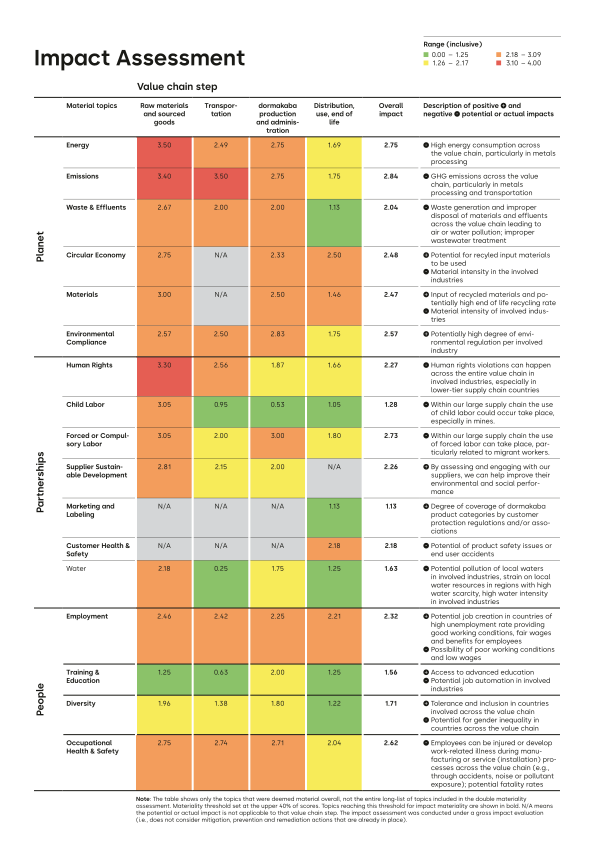
The assessment covered dormakaba’s entire global value chain. This was consolidated into the four distinct stages described in the value chain section:
Raw materials & sourced goods
Transportation
Production and administration
Distribution, use and end-of-life
This structure ensured that both upstream and downstream impacts were adequately captured, and that stakeholder perspectives, input data, and internal risk assessments were considered at each stage.
Impact materiality assessment – methodology and scoring
We applied a robust methodology aligned with ESRS 1, Appendix C, paragraph 54, which requires assessment of sustainability topics based on their severity and likelihood. The starting point was an updated long-list of sustainability topics from our last materiality assessment in 2021, derived from GRI standards and cross-referenced against ESRS requirements. This long-list was reviewed and validated prior to the DMA.
The company evaluated each topic using structured indicators, including over 50 external risk metrics from sources such as the OECD and World Bank, overlaid with internal data (e.g., Procurement, Production, HR, Sales). These were weighted by the share of business activity or geographic presence, adjusted for our specific operations.
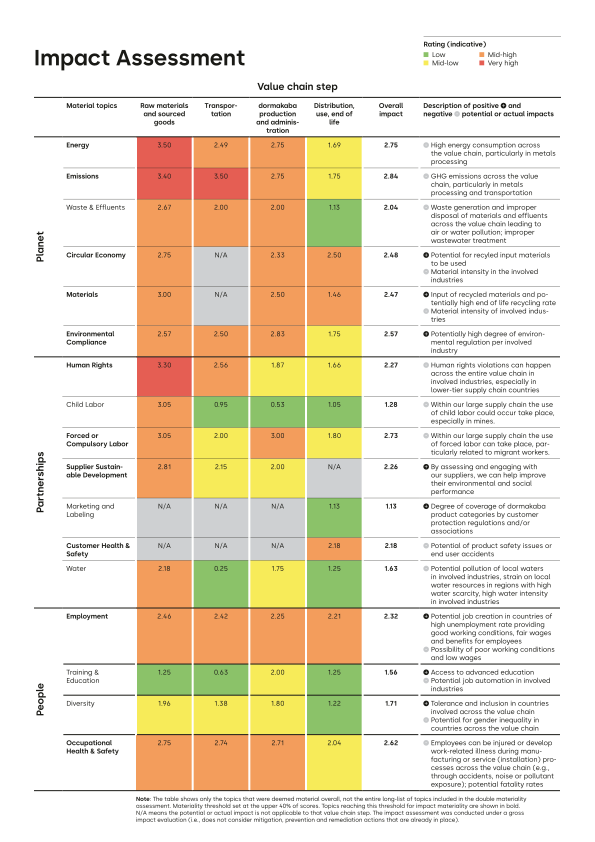
The assessment was conducted using a gross impact evaluation approach (i.e., does not consider mitigation, prevention, and remediation actions that are already in place), and the Human Rights Due Diligence Saliency Assessment from 2019 was integrated to address topics with significant social impact.
Severity scores were determined by examining the scale, scope, and irremediability of each potential or actual impact. These were rated on a scale of 1 to 4, where 4 represented the most significant impacts. Likelihood of occurrence was assessed via structured workshops and expert judgment and also rated on a 1 to 4 scale, where a score of 4 denoted a 100% certainty, i.e., an actual impact. The final impact score for each topic was calculated by fully weighting severity (100%) and partially weighting likelihood (25%).
In our impact materiality methodology, we placed greater importance on severity over likelihood. This reflects a risk management perspective that emphasizes the intrinsic seriousness of sustainability matters (e.g., forced labor, environmental harm), even if the likelihood of occurrence is lower, in accordance with the ESRS principle of prioritizing the most severe actual or potential impacts. Additionally, this considers potential variation in stakeholder perception or data limitations.
Scores were aggregated across each value chain stage using weighting factors based on operational relevance and data inputs.
Stakeholder engagement from previous years played a critical role in this process and included:
A global employee survey (n = 1,360) segmented into general employees, senior management, and sustainability network.
16 stakeholder interviews, including both internal (Executive Committee and Sustainability Council) and external parties (customers, suppliers, investors, civil society).
Weighting model: internal vs. external (60/40); internal sustainability experts and top management vs. general staff.
Financial materiality assessment – methodology and scoring
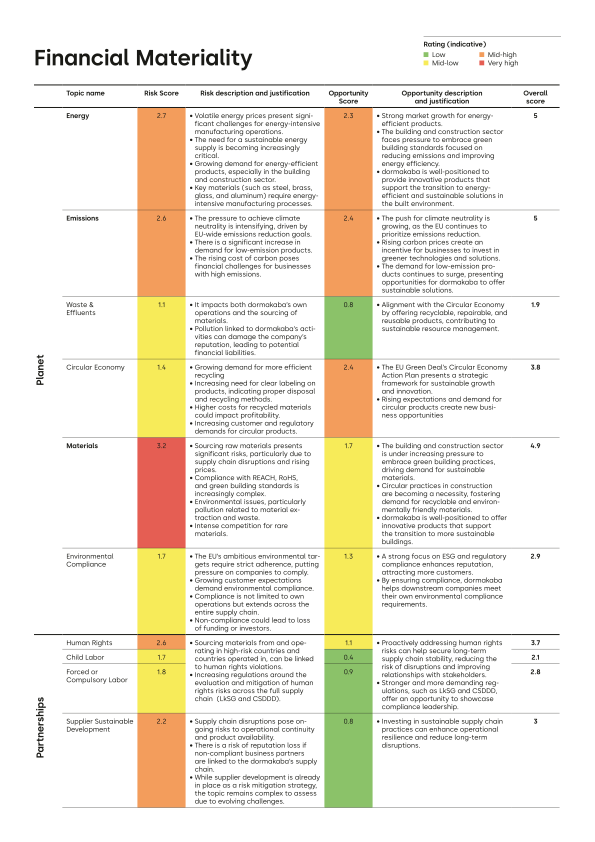
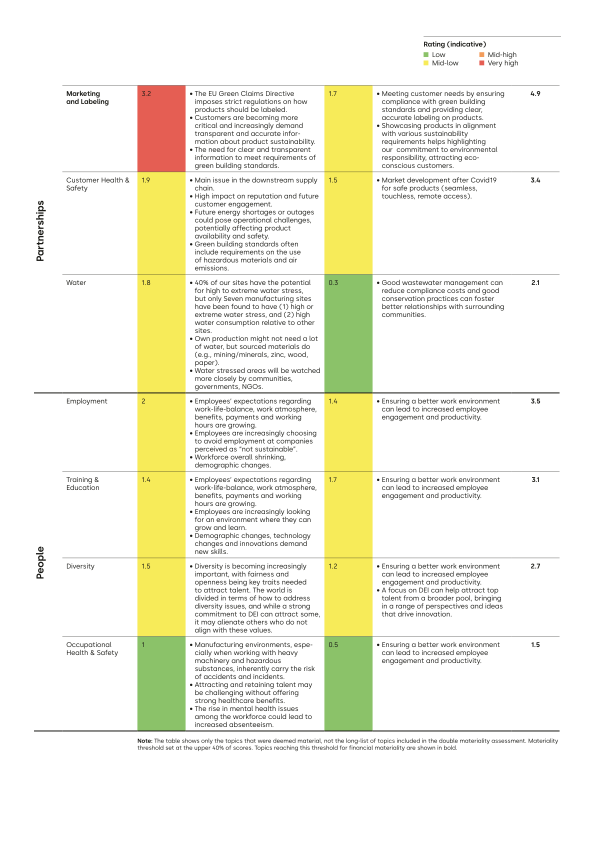
To evaluate financial materiality, we conducted an outside-in risk and opportunity assessment that aligns with the enterprise risk management system. The evaluation involved a targeted survey and workshop with 60 global and local representatives across Procurement, Operations, HR, Compliance, Product Development, Product Management and Corporate Sustainability. The latter function incorporated the results of physical and transition climate-related financial risk scenarios (TCFD-aligned) into the assessment. External experts also conducted an independent review of ESG frameworks, peer benchmarks, and sustainability trends.
Topics were evaluated based on their likelihood of occurrence and potential financial impact, both rated on a scale of 1 to 4. Likelihood ratings are aligned with dormakaba’s enterprise risk management thresholds, with a score of 4 indicating high certainty of occurrence in the short to medium term. Financial impact ratings consider the estimated magnitude of potential losses or gains, as well as strategic influence, stakeholder expectations, and reputational implications, with a score of 4 representing the highest level of impact.
Scores were calculated separately for risks and opportunities and then consolidated into a final financial materiality score. Internal stakeholder feedback contributed 60% of the weighting, while expert analysis contributed 40%. This dual-source approach ensured robustness and relevance to both internal priorities and external expectations.
Threshold setting and materiality matrix
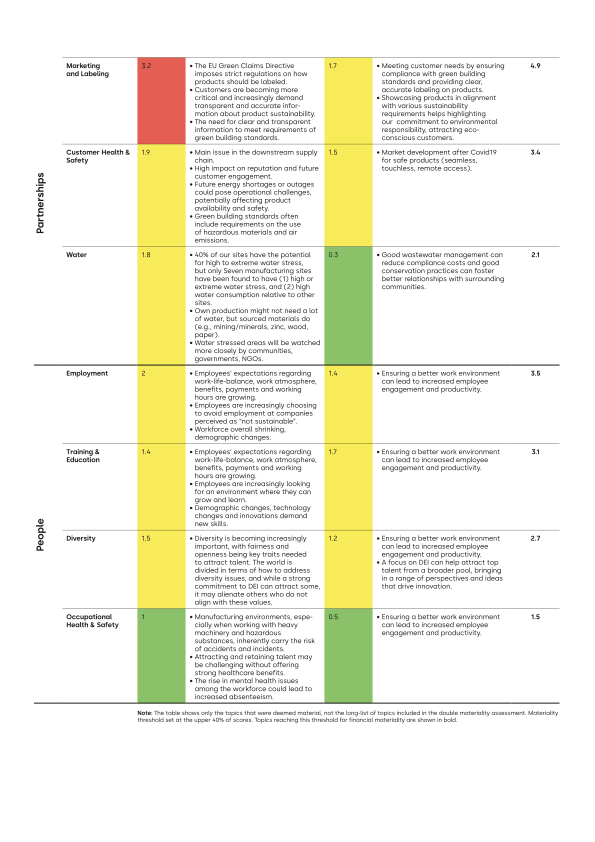
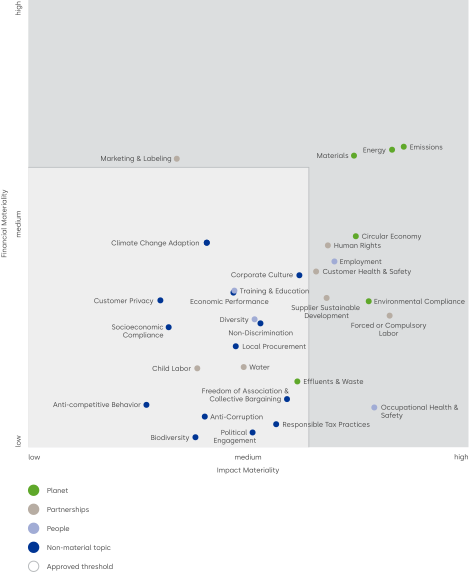
After calculating the scores for each sustainability topic, dormakaba plotted them on a two-axis materiality matrix. The x-axis reflected impact materiality scores and the y-axis represented financial materiality scores. Two options for threshold setting were discussed with the Group Sustainability Council: Option 1, a focused approach capturing the top 40% of scores, and Option 2, a more inclusive threshold capturing the top 50%. The Executive Committee selected the focused threshold based on the Councilʼs recommendation, reflecting a strategic intent to focus on the most significant issues. Additionally, Diversity and Training and Education were retained due to their strategic relevance, despite falling below the numerical threshold. The Board of Directors subsequently approved the same.
Materiality matrix
Strategy & Governance
The results of the DMA directly inform dormakaba’s corporate strategy, Shape to Growth. With this, we have further integrated sustainability into our solutions, operations, and processes to better meet the expectations of our customers. Material sustainability topics are embedded in the Sustainability Framework and targets, and inform investment priorities, supply chain management, and risk oversight. For instance, climate-related risks identified through TCFD-aligned analysis influence both capital planning and product innovation, while human rights issues are embedded into auditing and sourcing processes (e.g., contracts and assessments). These topics are also reflected in our governance structure, which includes Board-level oversight and execution by the Group Sustainability Council and operational teams.
As part of our company strategy, dormakaba has committed to an industry-leading framework for sustainability with ambitious ESG targets. We share the belief that sustainability is at the core of our industryʼs future and of the building industry in general, and thus critical for our business model.
We have also aligned our activities with the UN Sustainable Development Goals (SDGs), focusing on environmental, social, and governance (ESG) impact. We can make a substantial contribution to nine of the SDGs by addressing our material topics and also see the SDGs as a guide for focusing on new business opportunities.
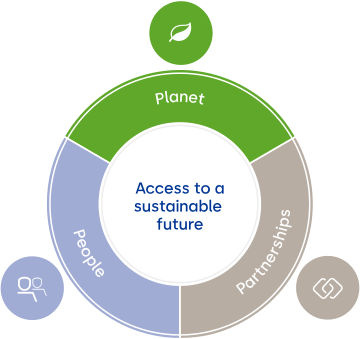
Our Sustainability Framework 2021–2027
We are committed to shaping a more sustainable industry and future. Sustainability is embedded at the core of our strategy and vision and is present in everything we do.
People We empower our people so that they can unlock their full potential
Aim
We create a fair, inclusive, and safe culture that enables our employees to thrive. We provide a workplace where they can continuously grow, openly contribute with their ideas, and feel proud of their achievements.
Material topics
Fair Employment
Training & Education
Diversity, Equity & Inclusion
Occupational Health & Safety
Planet We open the doors wide to a low-carbon and circular economy
Aim
We develop innovative and resource-efficient solutions for the circular economy and do our part to ensure a climate-resilient future. We offer durable and energy-efficient products that help our customers achieve their own sustainability goals.
Material topics
Energy & Emissions
Circular Economy & Materials
Environmental Compliance
Partnerships We collaborate to promote sustainable development beyond our own doors
Aim
We lead by example and engage with our partners to drive more eco-friendly practices and support the protection of human rights. Through our secure access solutions, we also contribute to peopleʼs health and safety. We work with partners to raise awareness of the safe operating practices of our products.
Material topics
Supplier Sustainable Development
Human Rights
Forced or Compulsory Labor
Customer Health & Safety
Marketing & Labeling
Sustainability governance
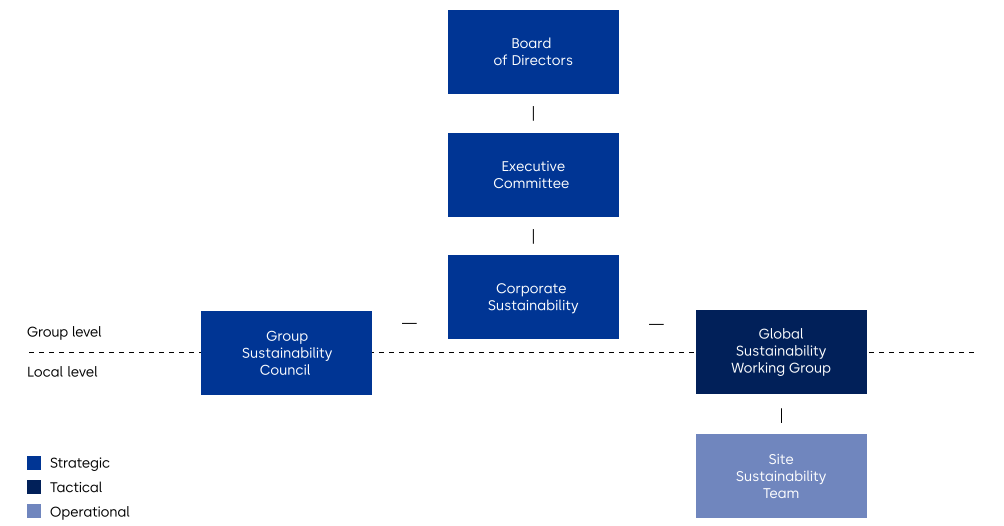
Our Sustainability Charter defines the management system required to achieve our sustainability vision. The governance of sustainability-related risks and controls at dormakaba is structured to ensure accountability and reliability in sustainability reporting. The Board of Directors has the ultimate responsibility for overseeing sustainability governance. This includes approving the sustainability framework, reviewing and endorsing the double materiality assessment, and formally approving the annual sustainability report. The Board receives an update from the Group Sustainability Officer at least once per year. Five of the current Board members have had direct responsibility for, or obtained special certification in environmental, social, and governance matters and corresponding regulations.
The Board’s Audit Committee plays a central role in ensuring the integrity of sustainability disclosures and monitoring external assurance processes. The Chairman of the Board also meets quarterly with the Corporate Sustainability function and receives monthly reports to monitor performance and evaluate risk exposure.
In addition, ESG targets were introduced in 2023 as part of the long-term incentive (LTI) plan for the Executive Committee and top management to reflect the increasing importance of sustainability and cover both social and environmental topics that are addressed by our sustainability framework. The ESG portion of the LTI plan is weighted at 20% and consists of specific and measurable targets on climate change mitigation, building a proactive safety culture, and addressing customer needs in achieving green building standards. These targets are reviewed annually and are aligned with our broader sustainability roadmap and risk priorities. The level of achievement against these ESG targets directly influences remuneration outcomes under the LTI scheme, reinforcing accountability at the highest level. The Nomination and Compensation Committee oversees the calibration, monitoring, and evaluation of these targets, ensuring they are both ambitious and credible. Further information can be found in our Compensation Report.
At the executive level, the Executive Committee (EC) is accountable for setting the company’s sustainability strategy and objectives and for ensuring their implementation. The EC monitors progress through monthly reports on the status of sustainability initiatives and integrates corrective actions where targets are off track. It also approves resource allocation annually to ensure sufficient financial and human capital are available to meet strategic sustainability goals.
Furthermore, the EC approves material sustainability topics and target ambition levels, based on recommendations from the Group Sustainability Council. The Group Sustainability Officer reports directly to the CEO and can therefore also alert them on highly relevant climate-related and sustainability issues.
The cross-functional Group Sustainability Council, mandated by the EC and chaired by the CEO, includes senior leaders from global functions and regions. Meeting at least twice a year, the Council ensures the implementation of the sustainability framework and promotes ethical, social, and environmental responsibility in line with the dormakaba Code of Conduct. Members share outcomes within their networks. The Council reviews performance and advises the EC on the policies, systems, and resources needed to meet international standards and UN Global Compact commitments.
Corporate Sustainability develops, monitors, and coordinates the implementation of the Sustainability Management System across the organization and develops its related policies and standards. The role of Corporate Sustainability is to report to the Group Sustainability Council regarding the company’s management of sustainability and business conduct, in line with the aforementioned external and internal policies, regulations, charters, and principles. The Corporate Sustainability function chairs the Global Sustainability Working Group and is in regular contact with the Expert Group Leads to give guidance, build capability, and offer project support.
The Global Sustainability Working Group meets bimonthly and annually in person to review performance, share best practices, and develop initiatives to meet sustainability targets. It includes four Expert Groups — Sustainable Products, Supplier Sustainable Development, People, and Environment, Health & Safety — which design and implement initiatives within their areas. Members serve as sustainability experts, supporting site teams and project managers with global standards and objectives. Expert Groups also meet monthly to drive progress.
An overview of the dormakaba sustainability organization can be found below. Further duties, authorities, and reporting channels for the various bodies are set out in the Sustainability Charter.
Sustainability organization
Strategic targets
In line with the above-described strategic approach, dormakaba has committed to working toward 31 sustainability goals during the current strategic period.
Target-setting process and performance monitoring
The sustainability target-setting process is governed by our Sustainability Management System and follows a structured, multi-stakeholder approach aligned with ESRS requirements and best practice. Target proposals are developed by the Corporate Sustainability team together with external experts and functional Expert Groups within the Sustainability Working Group, based on competitor analysis, industry benchmarking, and internationally recognized frameworks, including the Science Based Targets initiative (SBTi) for Scope 1–3 climate targets, the Ellen MacArthur Foundation circular economy principles, and the Leadership in Energy and Environmental Design (LEED) standard.
Proposed targets are reviewed by functional leaders from Human Resources, Procurement, HSE, Operations, and Product Development within the Group Sustainability Council, which ensures cross-functional alignment through workshops and roundtables. Following this process, targets are finalized and submitted to the Executive Committee and Board of Directors for approval.
We systematically evaluate activities and projects supporting our sustainability objectives through an initiative tracker that captures their sustainability and climate-related impacts. At site level, project managers, QHSE managers, plant managers, and site heads are responsible for defining and implementing additional adaptation and mitigation measures aligned with global targets and for overseeing their execution.
Progress is monitored monthly, and performance against targets is tracked quarterly wherever possible. Updates are reported regularly to the Executive Committee and the Group Sustainability Council, which conducts formal reviews twice per year. Sustainability performance is also reviewed quarterly by the Chairman of the Board and annually by the full Board of Directors.
The table below outlines our key targets and summarizes the progress achieved to date.
People
Material Topic
Target
Target
Year
Baseline
FY 20/21
Performance
FY 25/26
Notes
Status
Fair
Employment
Maintain our employee engagement score at or above the IBM Global Norm (73)
2027
70%1)
70%
In FY 25/26 we invited all employees to take part in the dormakaba dialogue survey. Overall engagement reached 70%, matching the level of the 2023 dialogue survey (71%) and outperforming the Pulse Check 2023 (61%).
p0
Training & Education
Increase average training hours to 20 hours per employee per year2)
2027
12.7
hrs/employee
12.1
hrs/employee
The decrease reflects substantial improvements and changes in data collection processes, including more precise per-employee reporting and revised registration methods, which affect year-on-year comparability.
p0
Diversity, Equity & Inclusion
1 in 3 managers are women
2027
19%
22%
Performance on this sustainability target remained consistent with the previous year, with no significant progress recorded.
p2
25% women in succession planning for top management positions
2027
14%
28%
The desired target level was already achieved in FY 23/24 and continues to be monitored.
p10
Occupational Health & Safety
Decrease the recordable work-related injury rate by 33%
2027
6.93
4.19
We made further measures, reducing the injury rate by 40% vs. the baseline, and by 7% vs. prior year.
p10
1Baseline FY 19/20 in line with the dormakaba dialogue cycle
2Headcount basis
Planet
Material Topic
Target
Target
Year
Baseline
FY 20/21
Performance
FY 25/26
Notes
Status
Energy & Emissions
Reduce operational emissions (Scope 1+2) by 42% in line with a 1.5°C future
2030
74,770
tCO2e1)
55,149 tCO2e
We are well on track and have reduced emissions by 26% versus the baseline.
p6
Reduce value chain emissions (Scope 3) from purchased goods and services and the use of sold products by 25%
2030
734,850
tCO2e1)
776,261 tCO2e
For the second year in a row, we decreased value chain emissions. This was driven primarily by improved energy testing and efficiency of our products.
p0
Become carbon neutral in our operations
2030
74,770
tCO2e1)
55,149 tCO2e
We will continue to reduce carbon emissions in line with our 1.5°C commitment through 2030. Starting in 2030, residual emissions will be offset through Gold Standard-certified projects.
p6
Achieve net zero emissions
Latest 2050
810,437
tCO2e1)
918,626 tCO2e
Our reported Scope 1–3 carbon emissions have decreased by 1% tCO2e vs. previous year.
p0
Have best-in-class energy efficiency for new products
2023
–
Target achieved
Our EcoDesign Specification Template has been mandatory for all new product developments since FY 23/24.
p10
Reduce energy intensity of our operations by 25%
2030
100.5
MWh/mCHF1)
88.7 MWh/mCHF
Energy intensity remained relatively stable, with a slight increase driven primarily by changes in revenue.
p5
80% of purchased electricity is from green sources
2030
46%
55%
Performance on this sustainability target remained consistent with the previous year, with no significant progress recorded.
p7
100% of fleet in Germany, France, and the UK is electric- or hydrogen-based
2030
–
30%
We nearly doubled the amount of electric vechicles vs. previous year, driven primarily by Germany and first replacements in France.
p3
All manufacturing sites maintain Energy Management Systems based on ISO 500013)
2023
21%2)
Target achieved
Target achieved in FY 24/25 and reconfirmed in this financial year.
p10
Circular Economy & Materials
All new product developments and optimizations are covered by our circularity approach
2023
–
Target achieved
Our EcoDesign Specification Template has been mandatory for all new product developments since FY 23/24.
p10
Conduct feasibility studies to evaluate
extended producer responsibility (EPR)
take-back schemes for selected products in key markets, in collaboration with industry associations
2027
–
Ongoing feasibility studies in India and Germany.
The scope of target has been adjusted as explained in the Resource Use and Circular Economy chapter.
p5
Introduce recycled plastic in packaging, progressively increasing its share as part of the transition from fossil fuel-based plastics
2027
–
We switched 7% of our spend in plastic packaging (e.g., screw bags and films) to 50% recycled content.
The scope of target has been adjusted as explained in the Resource Use and Circular Economy chapter.
p0
100% of paper, wood, and carton stems from responsible forestry sources as accepted by the US Green Building Council
2027
–
58%
We have nearly doubled our paper, wood, and carton purchase from responsible forestry sources vs. previous financial year (33%).
p6
Double the total number of sustainability-related product declarations / certifications, including Cradle to Cradle and for recycled content
2027
170
281
Despite a slight decrease from 323 to 281 valid documents due to expirations, a substantial number of new declarations and certifications were published during the reporting year, bringing us closer to our target.
p8
Zero waste to landfill in operations
2027
3,443 tons
900 tons
This is a reduction of 43% versus the previous financial year and 74% versus the baseline year.
p7
1Baseline FY 19/20 in line with Science Based Targets initiative validation
2Baseline FY 19/20
3Scope refers to all manufacturing sites constituting the top 85% of on-site energy consumption.
Partnerships
Material Topic
Target
Target Year
Baseline
FY 20/21
Performance
FY 25/26
Notes
Status
Supplier Sustainable Development
Assess all high-risk suppliers for their sustainability management through a third party or off-board them for lack of participation
2027
10%
42%
p4
At least 45% of our high-risk suppliers participate in our sustainability engagement program
2027
10%
42%
p9
Close at least 80% of high-priority corrective actions of assessed suppliers
2027
–
47%
We have substantially improved performance vs. previous year (5%) due to implementation of better corrective action plan management.
p6
90% of assessed suppliers with priority findings have completed a sustainability training
2027
–
40%
p5
Provide information regarding conflict minerals for high-risk suppliers
2027
–
We requested Conflict Minerals Reporting Templates from over 1,100 suppliers (68% positive response rate)
p6
Human Rights
Reduce the risk of forced labor for migrant workers by providing ethical recruitment trainings for all of our labor agents in sending and receiving countries
2027
–
Target achieved
We will ensure that all new labor agents receive the same training as part of their onboarding process.
p10
Support the right to water in communities where we manufacture by establishing water stewardship programs in areas of high water scarcity, with no absolute increase in water consumption and reducing water intensity by 28%
2027
75,086 m3 absolute consumption and 25.5 L/hours worked1)
59,997 m3 absolute consumption and
22 L/hours worked
The target was achieved ahead of schedule in FY 22/23, and we will continue to monitor.
p10
Ensure supply chain traceability for minerals with a high risk of child labor
2027
–
We continued our partnership with Save the Children Switzerland. We also collected 345 Extended Minerals Reporting Templates from our suppliers.
In the second year of the partnership, 30 children, along with 138 underage siblings, benefited from support through a child labour remediation initiative targeting the mining sector in the DRC.
p8
Customer Health & Safety
Collaborate on health and safety training with subcontractors and installation partners
2027
–
A new standard contract clause “Terms & Conditions for Installers” includes health and safety training obligations.
The “Terms & Conditions for Installers” was rolled out in the U.S. and will be continued in other countries over the next years.
p5
Collaborate on training and provide information materials on the safe operation of our products for all end users
2027
–
Target achieved
We provide training and information materials to support the safe operation of our products. A review of historical safety incidents did not identify any cases where additional training or information measures would have prevented or mitigated the incidents.
p10
At least one corrective action and/or one awareness training session for each product-related injury
2027
–
Target achieved
p10
1Baseline FY 19/20
Outlook
The table below outlines our plans for FY 26/27, summarizing the number of initiatives planned per material topic and type of activity.
Planned initiatives FY 26/27
Material topic
Examples of initiatives
Number of initiatives
Energy & Emissions
- Transition to electric vehicles
- Make investments for emission reductions, e.g., biogas purchase, facility improvements such as electricity optimizers, A/C replacement and solar installations
- Continue to enhance Energy Management Systems
- Reduce energy consumption of selected products
- Increase the purchase of aluminum, brass, and steel with recycled content
37
Circular Economy & Materials
- Continue research and activities on lead-free materials
- Continue testing and conducting feasibility assessments for plastic-free and sustainable packaging concepts
- Introduce recycled aluminum for ST PRO Green
- Operationalize a product take-back program in two countries
- Continue implementation of zero waste to landfill action plans
33
Fair Employment
- Continue conducting annual living wage gap assessment and close any gaps discovered
- Measure global employee engagement and initiate activities
2
Training & Education
- Design, implement, and promote learning and development programs
1
Diversity & Inclusion
- Give training modules on unconscious bias and cultural diversity
- Create local incusion roadmaps and activities
9
Occupational Health & Safety
- Make investments to improve health and safety, e.g., first-aid training, risk & hazard assessments, machine guarding, ergonomics, PPE, material handling, heat stress, blind spot coverage in high-traffic areas, purchase of lift carts and tables
17
Human Rights
- Conduct social audits at our locations
- Continue child labor remediation partnership with Save the Children
- Collect of Extended and Conflict Minerals Reporting Templates from selected suppliers
- Continue water meter installation and water conservation initatives
14
Supplier Sustainable Development
- Conduct EcoVadis and on-site assessments of suppliers
- Provide training for suppliers with high-priority findings
16
Marketing & Labeling
- Develop new sustainability-related product declarations or certifications
12
Resource allocation and planning
Sustainability planning is integrated with the Group’s medium-term financial planning. Based on global sustainability targets, each site is assigned key initiatives, with local project managers responsible for execution and resource planning. They provide a bottom-up input on resource needs, and local controllers and finance teams confirm inclusion of these financial resources in the global medium-term financial planning process. The Group Sustainability Council reviews plans and budgets annually, with final approval by the Executive Committee.
This table provides a detailed overview of the current and future financial resources — covering both OpEx and CapEx — allocated to the implementation of the action plans addressing each material topic identified by dormakaba.
Current and planned resources
FY 26/27 (CHF thousand)
FY 25/26 (CHF thousand)1)
Material topic
CapEx
OpEx
Total
CapEx
OpEx
Total
Energy & Emissions
3,974
373
4,347
6,368
6,256
12,624
Circular Economy & Materials
257
437
694
15
823
838
Fair Employment
0
160
160
0
89
89
Training & Education
0
1,300
1,300
0
571
571
Diversity & Inclusion
0
213
213
0
269
269
Occupational Health & Safety
669
640
1,309
79
225
304
Human Rights
19
122
141
9
103
112
Supplier Sustainable Development
0
99
99
0
70
70
Customer Health & Safety
0
0
0
0
0
0
Marketing & Labeling
13
175
187
0
12
12
All topics
4,931
3,518
8,449
6,471
8,418
14,889
1Includes external costs and resources used for projects that are specifically allocated to the sustainability action plan, OpEx costs of renewable energy and recycling, as well as additional energy-savings, and CapEx investments related to non-IT fixed assets.
Stakeholder engagement and partnerships
dormakaba attaches great importance to regular contact and ongoing dialogue with our stakeholders at both local and global levels. We consider the close involvement of our stakeholders to be an asset in our ongoing efforts and therefore aim to build better mutual understanding based on trust to enhance our partnerships and collaboration.
We have established several formal and informal mechanisms to ensure that members of our Executive Committee and Board of Directors are regularly informed about the views, concerns, and interests of affected stakeholders with respect to sustainability-related impacts. These mechanisms are integrated into existing governance structures and are designed to ensure that stakeholder feedback informs strategic decision-making and risk management. Specifically:
Employee feedback: The company conducts anonymous employee surveys on a biannual basis to collect feedback on working conditions, diversity, equity and inclusion, and other sustainability-related topics. The aggregated results are reviewed by the Executive Committee and improvement plans are defined.
Employee pepresentation: In jurisdictions such as Germany, works council representatives participate in supervisory board meetings and bring stakeholder perspectives directly into governance discussions.
Investor and market engagement: The Chairman of the Board and the Group Sustainability Officer participate in regular governance roadshows with investors and proxy advisors. These sessions are designed both to gather input on ESG-related expectations and to provide transparency on the company’s actions and progress.
Customer-centric product development: The Head of Product Sustainability joins key customer meetings along with the commercial and innovation teams. A representative from the Executive Committee also participates in discussions that address product-specific environmental concerns. These interactions provide a direct line of feedback from customers on sustainability-related product expectations.
Sustainability governance: The CEO chairs the Group Sustainability Council, which convenes twice per year. During these meetings, the sustainability team presents synthesized stakeholder insights derived from NGO consultations, supplier sustainability audits, and external expert panels. These include findings from worker sentiment surveys conducted during social audits.
These channels allow the company to systematically collect and elevate stakeholder perspectives to the highest levels of governance, ensuring that sustainability-related impacts are continuously monitored and addressed in alignment with stakeholder interests.
Stakeholder
Stakeholder interest and views
Key methods of engagement
Employees
Employment practices and benefits, occupational health and safety, sustainable business practices, environmentally safe production processes, working conditions, wages and benefits
dormakaba dialogue survey, bilateral meetings with local Human Resources representatives, employee works councils or trade unions, safety committees, town halls
Investors
Financial performance and strategy, responsible business practices, eco products, transparent reporting, quantifiable objectives, governance
Product offering, product design and quality, trustworthiness and reliability, price level, innovation
Annual brand tracking survey, trade shows and associations, customer service hotlines
Partners, installers, distributors, customers, and end users
Technical training and product specifications, product design and quality, trustworthiness and reliability, price level, sustainability demands for green building certifications
Partner days (conferences), in-house product training, annual brand tracking survey, trade associations, direct e-mail requests
Suppliers
Contracting and delivery terms, qualification process, supplier sustainable development
We have been awarded a platinum medal for our sustainability management, the highest distinction from the world’s largest corporate sustainability ratings provider, EcoVadis. After four gold ratings, we are now among the top 1% of more than 150,000 companies assessed globally.
We are a Climate A List company, recognized as a leader in corporate transparency and action on climate change by the Carbon Disclosure Project (CDP). For our water management efforts, we achieved a B score.
We were recognized on the CDP Supplier Engagement A List for the second time, highlighting our leadership in engaging with suppliers on climate change and environmental action. This distinction reflects our commitment to transparency, collaboration, and sustainable practices throughout our value chain.
We maintained our “Prime Status” as awarded by the Institutional Shareholder Services (ISS) Environmental, Social and Governance (ESG) Corporate Rating. The ESG Corporate Rating assesses companies based on an analysis of more than 100 sector-specific ESG factors. Companies that receive particularly high scores within their respective industry are awarded a Prime Status distinction. This means that they fulfill ambitious absolute performance requirements.
In 2026 our MSCI rating remained unchanged at AA, maintaining our position among the leaders in our industry. The MSCI ESG Rating aims to measure a company’s management of financially relevant ESG risks and opportunities.
dormakaba is recognized among TIME’s World’s Most Sustainable Companies 2026. This recognition highlights organizations that are setting benchmarks in sustainability, responsible business practices, transparency, and accountability — and confirms dormakaba’s continued progress in these areas.
For the third time dormakaba was named as one of Europe’s Climate Leaders by the Financial Times and Statista, improving our score by around 100 places versus 2025. We are among the 600 European companies that are moving the fastest on decarbonization alongside financial growth.
 People


 Planet


 Partnerships