Workers in the Value Chain
We are committed to upholding human rights across our global value chain, working closely with suppliers and partners to ensure fair labor conditions.
As a company with a global value chain, dormakaba works with a diverse range of suppliers and partners across both the upstream and downstream segments. This includes those who source raw materials and produce components, and provide services (upstream), as well as those involved in installation and distribution (downstream). Ensuring fair labor conditions and good health and safety management practices throughout is of the utmost importance. While we do not have direct control over all workers within our value chain, we recognize the associated risks of potential human rights violations, such as the rights of migrant workers in the upstream value chain, or health and safety risks for installation workers in the downstream value chain. Consequently, we place strong emphasis on respecting human rights and require our business partners to commit to the same standards.
Our approach
Key functions such as Sustainability, Human Resources, and Procurement actively participate in stakeholder engagement with value chain workers and their representatives. The Group Sustainability Officer holds the most senior role responsible for overseeing the human rights engagement process and ensuring its results inform the companyʼs approach.
Our Sustainable Procurement Directive and Supplier Code of Conduct (SCoC) define our expectations for responsible sourcing, covering sustainability criteria, supplier compliance, and ethical business practices, including workers’ rights. The SCoC addresses human trafficking as well as forced, compulsory, and child labor and is part of our standard supplier contracts. Our Sustainable Procurement Directive outlines expectations towards local buyers and procurement colleagues, and stipulates that suppliers must sign the SCoC. Suppliers who refuse or do not have their own equivalent of equal quality are blocked from purchasing processes. The Sustainable Procurement Directive also includes a requirement for collecting carbon emissions data from suppliers to support our climate transition plan.
Furthermore, our human rights commitment, established in the dormakaba Statement of Commitment on Human Rights, extends to all individuals throughout the value chain. Our Human Rights Due Diligence process, detailed here, is our core approach to addressing and managing any human rights-related issues throughout our value chain. The dormakaba Terms and Conditions for Labor Agents and Contractors lays out the responsible labor requirements that all business partners providing or managing workers on behalf of dormakaba must comply with. Lastly, our Statement of Commitment on Responsible Minerals Sourcing outlines our expectations for suppliers in addressing human rights risks in our minerals supply chains.
All employees of our suppliers and business partners (i.e., value chain workers) have the opportunity to communicate their grievances in an open manner through our whistleblowing tool, as outlined in our SCoC.
As part of our on-site audits at supplier facilities, we conduct a confidential worker sentiment survey that covers key topics such as working hours, wages, and harassment. This survey gives workers a safe way to share concerns. The anonymized results are reviewed by our sustainability team and used to discuss necessary corrective actions with the supplier.
We also require suppliers to provide effective grievance mechanisms for their workers. During audits, we check whether these systems exist, are accessible, and are known and trusted by employees. If a mechanism is missing, the supplier must establish one as part of a corrective action plan.
Additionally, dormakaba is a member of the Responsible Minerals Initiative (RMI), which offers an independent grievance mechanism for value chain workers. This channel allows individuals to raise concerns about human rights, labor practices, or risks in mineral supply chains.
We monitor the effectiveness of these efforts through follow-up audits, analysis of anonymous worker surveys, and tracking the use of our whistleblowing tool.
We are not currently pursuing material opportunities in relation to value chain workers nor have we taken measures to mitigate negative impacts on workers that arise from the transition to a greener, climate-neutral economy.
Remediation for value chain workers
When adverse human rights impacts caused by our business activities or linked to our operations are discovered, we are committed to taking timely and transparent action to remediate them in a fair and equitable manner in accordance with the UNGPs. When we find impacts linked to our business relationships, we will use our influence to encourage suppliers and business partners to respect human rights.
If a zero-tolerance issue is found during an on-site assessment, all payments and purchase orders to the supplier are immediately suspended until the problem is fully resolved. We then conduct follow-up audits and closely monitor the situation to ensure corrective actions are taken.
In cases involving child labor, suppliers must follow a specific remediation process. This includes providing medical care, covering the childʼs education costs, and continuing to pay their full wage — without requiring them to work — until they reach the legal working age.
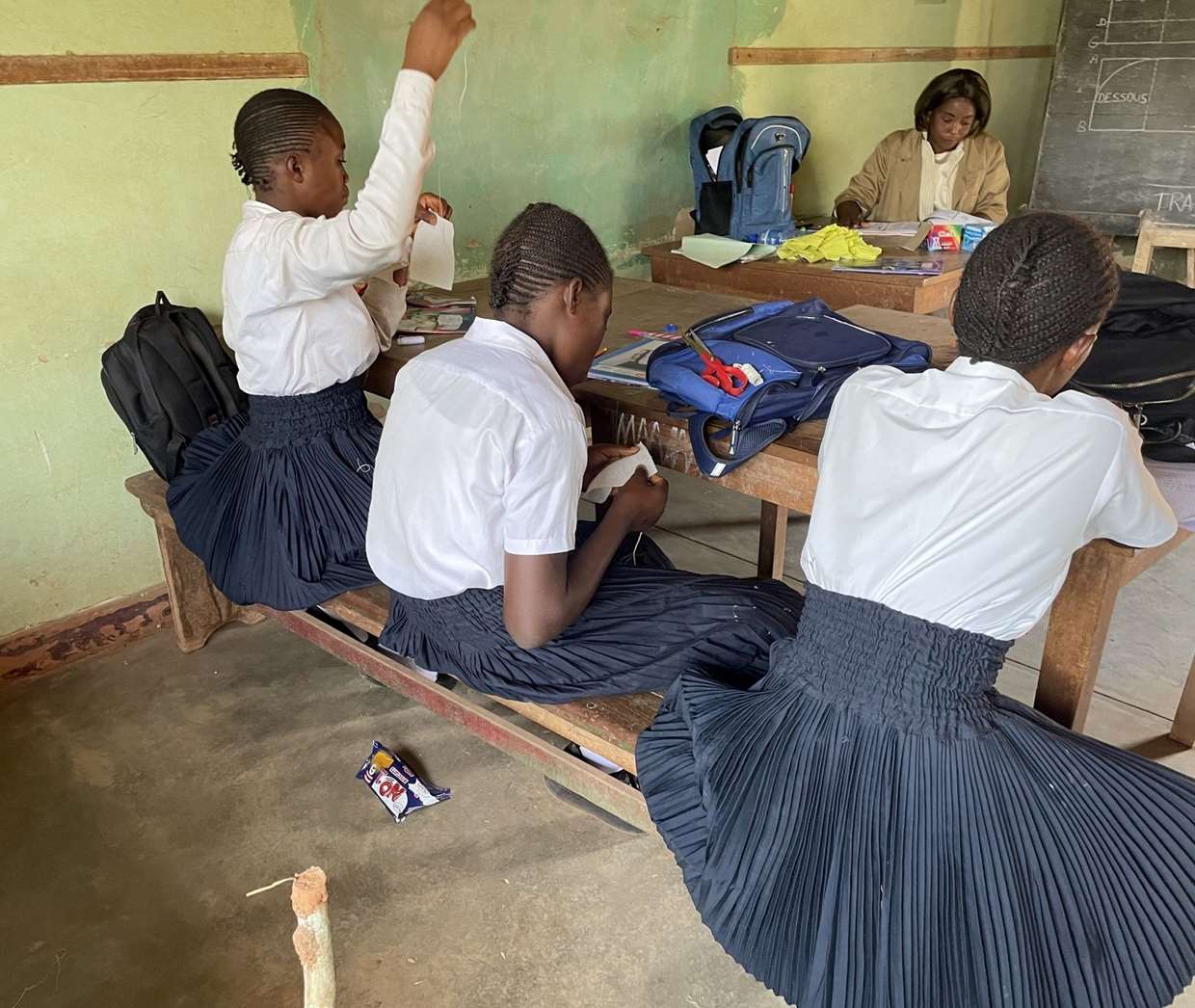
Remediating child labor victims in the small-scale mining communities of the Democratic Republic of Congo
In a landmark initiative, aiming for more responsible supply chains, dormakaba partnered with Save the Children Switzerland and The Centre for Child Rights and Business to tackle child labor in small-scale mining communities in the Democratic Republic of Congo (DRC), where 70% of the world’s cobalt is sourced and child labor is widespread.
The project supports children and youth working in cobalt mines by reintegrating them into school or vocational training. Each child receives a tailored remediation plan, which may include psychological support, a monthly stipend, full coverage of education and medical costs up to age 16, and guidance from a dedicated case manager. This holistic, community-based approach ensures culturally sensitive, long-term solutions and builds a local support network to prevent future cases.
Over ten years, dormakaba will invest around CHF 1 million in the project. So far, 30 children have joined the program, of whom nine have already completed the remediation plan. To meet the increasing number of children onboarded, the number of case managers is also growing. Additionally, our partnership financially supports school access for the 138 underage siblings of the children participating in the remediation program.
We also engaged additional Swiss and international companies to expand the initiative and raised awareness at several gatherings of the Responsible Minerals Initiative and the Cobalt Congress.
Our activities
Supplier sustainable development
We are committed to maintaining sustainable supply chains that protect both the communities and the environments where our resources originate, while also promoting business growth through ethical and legal practices. We are therefore committed to leveraging our purchasing power to benefit partners whose values align most closely with our own. For example, we incorporate sustainability evaluations into new business award decisions as part of our new Sourcing Board.
We are setting higher standards for our suppliers to foster circular solutions. Learn more about how we are increasingly sourcing recycled materials and goods harvested through responsible forestry practices.
Identifying supply chain risks
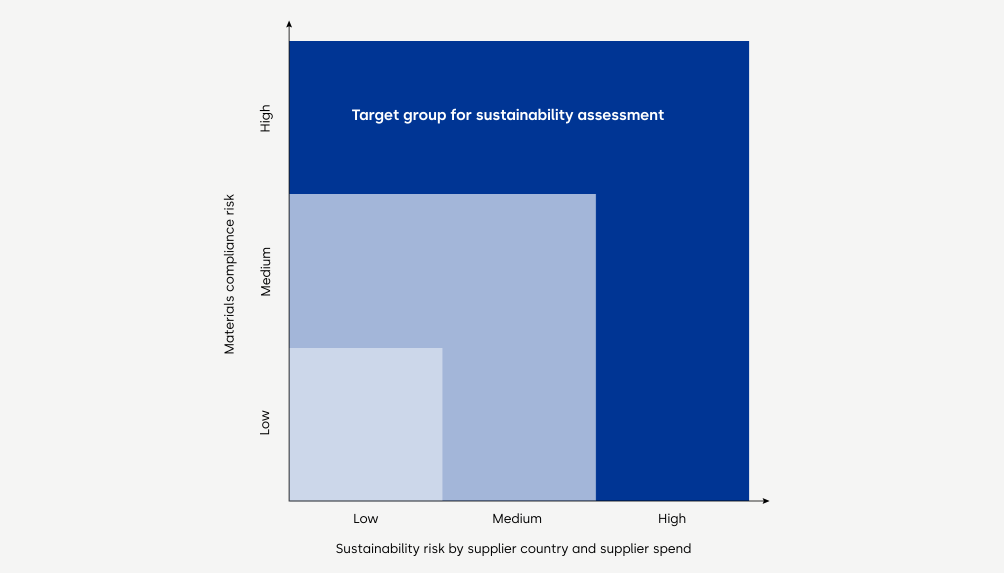
dormakaba has defined a target group for sustainability assessments based on identified sustainability risk factors — such as origin country, labor risks depending on the service provided, and the material content of the goods procured or potential labor risks for outsourced services. A material content risk assessment focuses on identifying potential hazardous materials covered by the European Union’s REACH Regulation and RoHS Directive, as well as other applicable regulations such as the Toxic Substances Control Act (TSCA) and California Proposition 65. It also considers additional substances of concern, including per- and polyfluoroalkyl substances (PFAS), and conflict or other high-risk minerals such as tungsten, tantalum, tin, gold, and cobalt. Suppliers over a certain procurement threshold were taken into consideration as part of the categorization work.
The high-risk group includes 2,094 suppliers from our Tier 1 base, both for direct (e.g., material goods) and indirect (e.g., services) spend. The target group was updated in FY 25/26 based on the FY 24/25 spend data.
Supplier categorization for sustainability assessment
Supplier assessments
We work together with our high-risk suppliers to assess, improve, and further develop their sustainability performance, thereby ensuring fair employment conditions for the workers in our value chain. Supplier Sustainable Development is therefore one of the material topics in our Sustainability Framework 2021–2027, for which we have set ambitious targets. By 2027, we aim to:
- assess all high-risk suppliers for their sustainability management via a third party or off-board them for lack of participation.
- have at least 45% of our high-risk suppliers participate in our sustainability engagement program.
- close at least 80% of high-priority corrective actions via assessed suppliers.
- have 90% of assessed suppliers with priority findings complete a sustainability training.
- provide information regarding conflict minerals for high-risk suppliers.
We have been working with EcoVadis since 2019 to support our suppliers on this journey. Since then, 42% of our high-risk suppliers have been assessed.
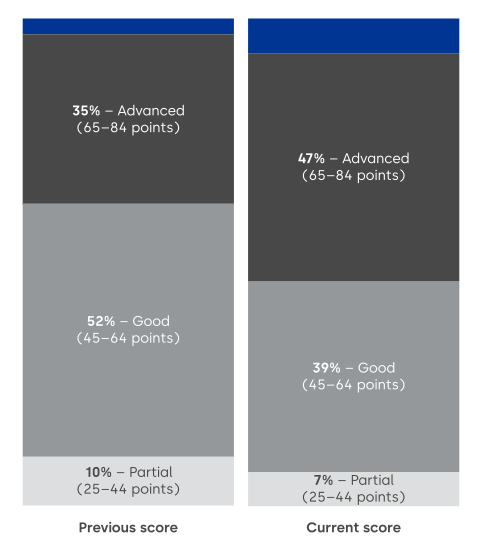
In FY 25/26, we engaged 546 high-risk suppliers and asked them to participate in the EcoVadis assessment (versus the 500 targeted suppliers). The positive participation rate was 29%. Of all suppliers with a completed rating as at 30 June 2026, 61% landed in the score band of “good” or above. However, 35% had only partial performance, with scores lower than 45, and 4% were considered to have insufficient performance. Furthermore, a total of three business relationships were terminated.
To track effectiveness of our actions, we monitor improvement in EcoVadis scores over time. 59% of all assessed suppliers have undergone a follow-up reassessment. Of those which underwent a reassessment in FY 25/26, 77% improved their score, with an overall improvement of 4.6 points. Among those that improved, the average supplier improvements per pillar were:
- Environment: +4.5 points
- Labor and Human Rights: +4.1 points
- Ethics: +4.7 points
- Sustainable Procurement: +6 points
The majority of reassessed suppliers exhibited either good (39%) or advanced (47%) performance. The proportion of suppliers with partial performance decreased from 10% to 7%. In FY 25/26, 47% of high-priority corrective actions have been closed.
Due diligence on cobalt and conflict minerals
As a company procuring electronic components, we must take action to increase transparency in our supply chain regarding human rights violations during the mining of high-risk minerals. We are not directly involved in the extraction of minerals in the value chain, and we do not directly import or purchase raw ore or unrefined minerals, although small quantities may be present in some of our products’ components. Therefore, collaboration with actors involved in mineral extraction, processing or transportation is crucial to identifying and managing the risks associated with potential links to conflict-affected or high-risk areas.
We also collaborate with others through our membership in the Responsible Minerals Initiative (RMI), chairing the RMI Cobalt Working Group. In this role, we directly engage with governmental stakeholders, smelters and refiners, multinational companies, and civil‑society actors to define strategies that increase transparency in the cobalt supply chain.
To increase transparency, we have set the following target, based on our human rights saliency matrix and input from external experts and top management in the course of our regular target-setting process: Our aim is that by 2027 we provide all relevant information regarding conflict minerals for high-risk suppliers and ensure supply chain traceability for minerals with a high risk of child labor.
For more information on this topic, please see our Statement of Commitment on Responsible Minerals Sourcing.
An important step in achieving these goals was the publication of our Statement of Commitment on Responsible Minerals Sourcing, which helps our suppliers understand our expectations when it comes to tackling the human rights risks in our minerals supply chains. The statement lays out the strategy and actions that we take in accordance with the OECD Due Diligence Guidance for Responsible Supply Chains of Minerals from Conflict and High-Risk Areas.
Since 2022, we have engaged directly with suppliers to gain greater insight into the upstream portions of our high-risk mineral supply chains. These conversations aim to assess the maturity of suppliers’ conflict minerals and cobalt management systems, support improvements, and explore opportunities for deeper collaboration.
We select suppliers for engagement based on their responses to the Conflict Minerals Reporting Template (CMRT) or Extended Minerals Reporting Template (EMRT) from the RMI. These tools help us identify high-risk smelters further up the supply chain (Tier 2 and beyond), as well as the Tier 1 suppliers connected to them.
Insights from engagement in the first half of the financial year — combined with learnings from previous years — led us to refine our strategy. Instead of broadly engaging all high-risk suppliers, we now focus on those who either failed to respond to our CMRT/EMRT requests or submitted weak disclosures, especially if they are linked to multiple components in our products. Our goal is to maximize transparency and help these suppliers improve their due diligence practices and reporting quality.
Ultimately, we aim to build supplier capability and mobilize broader support across our supply chain to increase pressure at critical chokepoints — such as at smelters and refiners.
In FY 25/26, we continued our collaboration with Assent for conflict minerals due diligence in Germany and the USA, while further expanding our risk-based supplier engagement in other regions. Overall, more than 1,100 suppliers were contacted (response rate was 68%) to provide Conflict Minerals Reporting Templates (CMRTs). This engagement further improved transparency and supplier awareness of responsible mineral sourcing. Among the evaluated CMRT responses:
- 42% of suppliers confirmed the intentional use of at least one conflict mineral (tin, tantalum, tungsten, or gold).
- 26% demonstrated robust due diligence programs, including sourcing policies, implemented due diligence measures and active supply chain inquiries.
- 15% showed weaknesses in their responsible sourcing practices.
We also expanded our Extended Minerals Reporting Template (EMRT) program. While previous reporting focused on cobalt and mica, the scope was extended to include copper, graphite, lithium, and nickel in line with the latest Responsible Minerals Initiative (RMI) reporting approach. More than 700 suppliers were contacted to provide EMRT information, and 49% of those submitted a response. Among evaluated EMRT responses:
- 49% of suppliers confirmed the use of at least one of the six covered minerals.
- 27% demonstrated robust due diligence programs.
- 22% showed weaknesses in their responsible sourcing practices.
Copper was the most frequently reported mineral among responding suppliers, followed by cobalt and nickel.
Subcontractor on-site audits
We focus closely on subcontractors due to the higher risk of human rights and labor issues. To address this, we conduct third-party on-site audits via ELEVATE, including worker sentiment surveys on topics like working hours, safety, and discrimination. Feedback from these audits is used to shape corrective actions.
To protect workers’ well-being, we avoid immediately ending relationships with non-compliant suppliers — except in zero tolerance cases. Instead, we work with them to address issues, as this approach better supports workers, vulnerable groups, and local communities. In cases of zero-tolerance findings, business is immediately stopped until the findings have been corrected.
During FY 25/26, 11 audits were conducted across Taiwan, Malaysia, China, and India, revealing mixed results. Several subcontractors achieved measurable improvements, including rating upgrades from D to C and the closure of priority findings, particularly in health and safety management. Notable progress was observed in Taiwan, Malaysia, and at one subcontractor in China, reflecting stronger management systems and corrective action implementation.
However, many suppliers continue to face challenges in addressing priority findings related to labor practices, health and safety, and business ethics. Consequently, most audited subcontractors will remain within the audit cycle and continue to receive monitoring and support. In China, targeted one-to-one coaching has been initiated to help suppliers strengthen their management practices and accelerate remediation efforts.
In addition to the follow-up audits, an initial audit conducted in India identified findings related to excessive working hours, insufficient rest periods, and health and safety management. Overall, while positive progress is evident across several suppliers, continued oversight and engagement remain necessary to ensure the effective closure of priority findings and sustained risk reduction across the supply chain.
Procedures in the event of non-participation or non-compliance
A sustainable development clause is included in contracts for new and renewing suppliers falling under our high-risk category, requiring them to participate in off-site assessments or on-site audits and implement improvement plans if their performance falls below our benchmarks. At the start of the relationship, suppliers must sign the dormakaba SCoC, with those refusing or lacking an equivalent standard being blocked.
For suppliers invited for an EcoVadis assessment, we require further actions based on their score: reassessments are required every two to five years for high-performing suppliers, and annually for those with partial performance, along with an improvement plan. Suppliers refusing the assessment or with insufficient scores will be shortlisted for an on-site audit by ELEVATE, resulting in a corrective action plan with a one-year deadline. Suppliers failing to implement the plan are blocked or eliminated.
The Responsible Procurement Steering Committee meets regularly to address special cases, including monopoly suppliers, internal Code of Conduct checks, acceptance of non-EcoVadis assessments, and monitoring blocked suppliers or those in active elimination for poor sustainability performance.
Sustainability trainings for suppliers and employees
Our procurement employees play a critical role in achieving our goals related to Supplier Sustainable Development. Their understanding of sustainability and our processes related to EcoVadis and other sustainability-related information requests is vital. For this reason, employees working together with suppliers participate in training programs that prepare them for sustainability- and assessment-related conversations with partners. In FY 25/26, 138 employees across the organization completed the Sustainable Procurement Directive training. Within the procurement function, 76 employees completed the course, following 37 employees who completed it in the previous financial year. In addition, procurement employees received training on topics such as material compliance, supplier decarbonization, and the EU Packaging Regulation.
To support sustainable development, we aim to engage 90% of assessed suppliers with priority findings in sustainability training by 2027. Training is provided free of charge on four topics: environment, climate change, labor, and health and safety. Suppliers are recommended specific training based on performance gaps. Of the 73 suppliers that were invited to participate in the training program, 40% had completed by the end of FY 25/26.